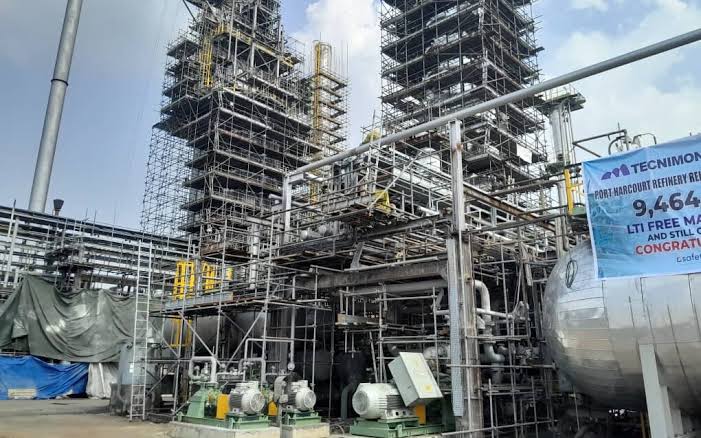
The reported partnership between the Nigerian National Petroleum Company Limited (NNPC Ltd.) and Chinese firms to restart the Port Harcourt and Warri refineries has once again reopened an uncomfortable national question: why has Nigeria spent billions of dollars over the years on refineries that barely refine?
For decades, successive governments have committed enormous public funds to the rehabilitation of the Port Harcourt Refining Company, Warri Refining and Petrochemical Company, and Kaduna Refining and Petrochemical Company.
Yet, despite repeated budgetary allocations, turnaround maintenance contracts, and political assurances, these facilities have remained largely idle or grossly underperforming.
The latest arrangement, involving collaboration with Chinese engineering and technical partners, is being presented as a practical solution to restore domestic refining capacity and reduce Nigeria’s heavy dependence on imported petroleum products.
But it also raises deeper concerns about governance, accountability, and the structural failures that have kept the country in a cycle of refinery rehabilitation without results.
Over the years, the Federal Government has reportedly spent billions of dollars on refinery repairs and turnaround maintenance.
Despite this, Nigeria has continued to rely heavily on imported fuel, while the refineries at Port Harcourt and Warri have either operated below capacity or shut down completely for extended periods.
The Kaduna refinery has also suffered similar fate, with repeated rehabilitation efforts failing to restore sustained production.
At the heart of this persistent failure is a combination of factors: weak project execution, corruption allegations surrounding maintenance contracts, inadequate technical capacity, poor oversight, and inconsistent policy direction.
Many of the rehabilitation contracts have been awarded and re-awarded over the years, yet the expected outcomes have remained elusive.
The involvement of Chinese firms in the latest revival effort reflects a growing reliance on foreign technical partnerships to resolve domestic infrastructure challenges.
While such collaboration may bring much-needed expertise, it also underscores a troubling reality: Nigeria’s inability to independently maintain and operate its critical refining assets despite decades of investment.
The Nigerian National Petroleum Company Limited, now operating under a commercialized structure, insists that the current rehabilitation drive is different, more structured, and performance-driven.
READ ALSO:FG bans Honorary Degree holders from using ‘Dr’ Title, moves to enforce stricter rules
However, public skepticism remains high, given the history of unmet promises and opaque project delivery timelines.
Critics argue that without full transparency on previous expenditures, detailed audit of refinery rehabilitation funds, and clear accountability for past failures, new partnerships risk becoming another expensive cycle of hope without output.
The broader concern is not merely about whether the Port Harcourt and Warri refineries will restart, but whether Nigeria has learned anything from decades of inefficiency.
A functioning refinery sector would significantly reduce foreign exchange pressure, stabilize fuel supply, and strengthen energy security. Yet repeated policy missteps have turned what should be a national asset into a symbol of waste and missed opportunity.
If the current partnership succeeds, it will mark a turning point in Nigeria’s downstream petroleum sector.
But success will depend not just on foreign technical input, but on political will, transparency in project execution, and strict accountability for public funds already spent.
Until then, the story of Nigeria’s refineries remains a cautionary tale of how infrastructure meant to power a nation can, instead, become a long-running drain on its resources.